US businesses in 2026 are overwhelmed by software choices. CRMs, warehouse systems, EHR platforms, HR tools, and AI assistants all compete for attention, and most buyers do not have time to test everything themselves. A good business software directory solves this problem by organizing tools into clear categories, surfacing the most relevant options, and helping you build a short, accurate shortlist before you talk to sales.
Blankx is one of these directories: a focused business software directory built for serious buyers and vendors who want faster, more transparent software decisions. With 31,000+ listings across 950+ categories and flexible listing packages, it is designed to serve US teams looking for clarity rather than noise.
What Is a Business Software Directory?
A business software directory is an online catalog where companies can discover, compare, and evaluate software products side by side. Instead of searching random blog posts and vendor sites one by one, buyers use directories to see multiple tools in one place, with consistent information like features, industry focus, and basic pricing signals.
For US businesses, directories are especially useful because they:
- Improve visibility for trustworthy vendors and make them easier to find in search results.
- Provide a central location with concise, structured information so teams can quickly filter by category, use case, or industry.
This combination of visibility and structure is why business directories have become a core part of modern B2B buying.
Why US Companies Rely on Software Directories
US SMBs and mid‑market companies now conduct most of the buying journey online before ever talking to a salesperson, often using comparison and review platforms along the way. A business software directory fits perfectly into this behavior: it gives operations, finance, and IT leaders a trusted place to explore their options and narrow them down before they commit to demos.
Key benefits for US buyers include:
- Trust: buyers are more likely to engage with vendors that appear in well‑known directories because it signals that the company is established and serious.
- Better discovery: directories surface tools you might not find with generic Google searches, including niche solutions for healthcare, logistics, or property management.
- Targeted research: filters and categories help you focus on tools that match your company size, industry, and deployment preferences, which shortens the research cycle.
Instead of chasing ads and random blog lists, US buyers can centralize their research and move faster.
How Blankx Works as a Business Software Directory
Blankx is a dedicated business software directory with 31,000+ verified listings and 950+ categories covering everything from WMS and EHR to rental property management, AI tools, and more. Unlike general business sites, Blankx is focused only on software, which means each category page and search result is tightly aligned with real buyer intent.
On Blankx, buyers can:
- Browse category pages tailored to specific use cases (e.g., warehouse management, construction accounting, therapy notes software).
- Compare multiple tools in the same category using consistent descriptions and data points.
- Click through to vendor sites when they are ready to request demos or trials.
This makes Blankx a practical starting point for US businesses that want a short, curated list of tools before they go deeper into reviews or negotiations.
Blankx Pricing Packages (Table)
For software vendors, Blankx offers a simple, tiered pricing model so you can choose the visibility level that matches your goals and budget.
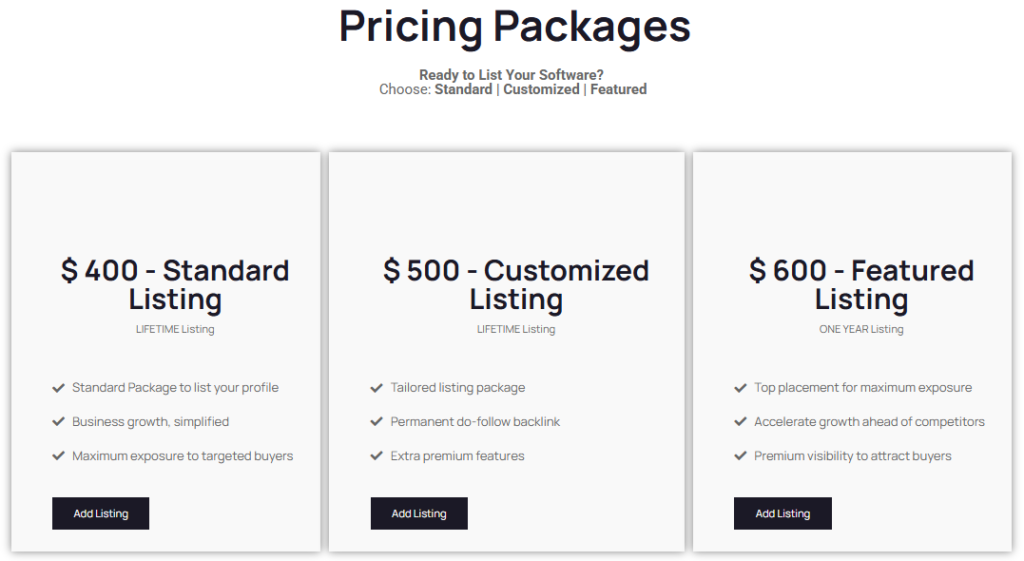
This feature‑based pricing approach allows vendors to start at Affordable Price, then move up to higher‑visibility tiers as they see traction and ROI from Blankx.
FAQ: Business Software Directory & Blankx
1. What is a business software directory?
A business software directory is an online platform that lists and categorizes software products so buyers can easily discover and compare solutions for specific business needs.
2. How does a directory help US companies choose software faster?
Directories reduce research time by grouping tools into clear categories, providing structured information, and giving buyers a curated starting point instead of forcing them to search and vet vendors one by one.
3. What makes Blankx different from big review sites like G2 or Capterra?
Blankx is software‑only and category‑first, with a strong focus on making it easy for buyers to see multiple relevant tools quickly, rather than overwhelming them with ads and dozens of similar listings. It is designed to be lean and vendor‑neutral, so both big brands and niche tools can stand out if they truly fit the category.
4. How much does it cost to list software on Blankx?
Vendors can create a Free Listing at no charge, upgrade to a Featured Listing for $600 per year, or choose a Sponsored Listing for $1,000 per year to maximize visibility.
5. Is Blankx only for US software companies?
Blankx is global, but its category structure and content are designed to be useful for US buyers comparing tools in major categories like warehouse management, construction accounting, CRM, EHR, and more.
6. How do I get my software listed on Blankx?
You can visit the Blankx website, choose the appropriate pricing package, and submit your product details through the listing flow described in the FAQ and Pricing pages.
How US Businesses and Vendors Can Get the Most from Blankx
If you are a US business evaluating software:
- Start on Blankx by choosing the category that matches your current project (e.g., WMS, EHR, property management, or AI tools).
- Use category pages to shortlist 3–7 tools that fit your size, industry, and deployment needs.
- Visit vendor websites, book demos, and use larger review sites only after your shortlist is clear.
In a crowded software landscape, a focused business software directory like Blankx gives both sides—buyers and vendors—a faster, more transparent way to meet. For US companies, it turns endless searching into a clear, structured path from problem to product.
Comments