
In today’s volatile global marketplace, having clear, real‑time insight into every movement, process, and connection across your supply chain isn’t just a competitive advantage, it’s a strategic necessity. That’s where supply chain visibility software comes in. This technology enables businesses to see what’s happening at every link in the supply chain, anticipate problems, optimize operations, and deliver better customer experiences.
In this comprehensive guide, we’ll explore what supply chain visibility software is, how it works, why it’s essential, the features to look for, top solutions in the market, and how to choose the right tool for your business.
What Is Supply Chain Visibility Software?
Supply chain visibility software is a digital solution designed to give companies real‑time, end‑to‑end transparency into all aspects of their supply chain, from suppliers and manufacturing to transportation, warehousing, and customer delivery. It combines live tracking, data integration, advanced analytics, and automated alerts to improve operational insight and decision‑making.
Unlike traditional manual tracking methods, relying on spreadsheets, emails, or phone calls, visibility software centralizes information and presents it in automated dashboards that update continuously.
How Does It Work?
At its core, supply chain visibility software gathers data from multiple sources and makes it actionable:
- Real‑Time Tracking: Sensors, GPS devices, ELD telematics, and carrier networks stream live data into the system so shipment locations and inventory movements are visible immediately.
- Integration with Enterprise Systems: The platform connects with ERPs, TMSs, and WMSs to unify planning data with execution data, so orders, forecasts, and actual movements are aligned.
- Cloud & Analytics Engine: Cloud‑based architecture stores and processes data, while analytics, often powered by AI and machine learning, generates insights, predicts delays, and recommends optimization strategies.
- Interactive Dashboards & Alerts: Custom dashboards show key metrics and exceptions in real‑time. Automated notifications help teams react to disruptions before they escalate.
Why Supply Chain Visibility Matters
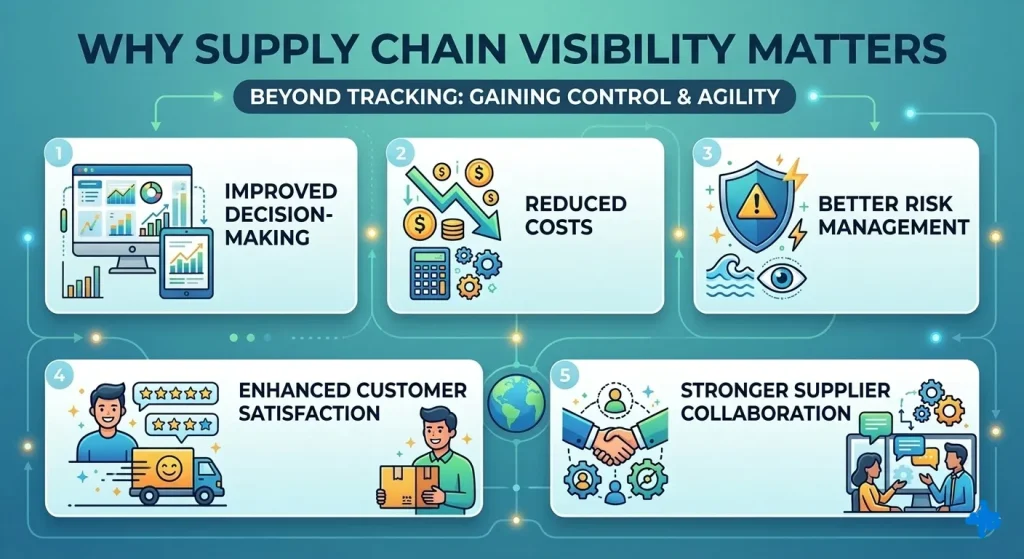
Supply chain visibility isn’t just about tracking; it’s about control and agility. Here are core reasons why it matters:
- Improved Decision‑Making: With accurate, real‑time data, operations leaders can make faster, smarter decisions, whether optimizing routes, reallocating inventory, or communicating delivery updates.
- Reduced Costs: Visibility helps identify inefficiencies, reduce delays, cut expedited shipping fees, and lower labour costs associated with manual tracking.
- Better Risk Management: Early warnings about delays, bottlenecks, and exceptions allow teams to act before small issues become big problems.
- Enhanced Customer Satisfaction: Accurate delivery estimates, real‑time updates, and transparent tracking boost customer trust and service levels.
- Stronger Supplier Collaboration: Shared data fosters trust and efficient coordination between partners, reducing miscommunication and operational friction.
Top Features to Look For
To ensure you choose a platform that delivers value, prioritize the following features:
✔️ End‑to‑End Real‑Time Tracking
Visibility across shipments and inventory across all modes and geographies.
✔️ Predictive Analytics & Alerts
AI‑powered predictions for ETAs, risk events, and demand changes with proactive notifications.
✔️ System Integrations
Seamless connections with ERP, TMS, CRM, and other enterprise systems.
✔️ Custom Dashboards & Reporting
Configurable dashboards that fit roles (e.g., executives, operations managers).
✔️ Collaborative Tools
Communication capabilities for internal teams and external partners.
✔️ Security & Compliance
Secure data handling and compliance with regulatory standards.
Top Supply Chain Visibility Software Solutions in 2025/2026
Here are some of the best visibility platforms that industry leaders trust:
- 🏆project44
A robust real‑time visibility platform covering road, air, rail, and ocean with predictive analytics and deep integrations.
- 📦 FourKites
Specializes in real‑time transportation tracking with machine‑learning‑based ETA predictions.
- 🚢 GoComet
AI‑powered logistics flow platform with control tower capabilities and end‑to‑end shipment visibility.
- 💼 Other Notable Tools
- Coupa (supplier and spend visibility)
- Onebeat (inventory optimization and demand sensing)
Each option supports multi‑mode visibility, analytics, and connectivity with key enterprise systems.
To explore platforms that integrate seamlessly with your business operations, Blankx offers customized implementation support.
How to Choose the Right Solution
When evaluating software, consider:
- Scalability: Can the tool grow with your business?
- Integration Needs: Does it connect seamlessly with your ERP, TMS, and other core systems?
- Analytics & Predictive Capabilities: Can it forecast disruptions and suggest operational actions?
- Support & Implementation: What kind of onboarding and support is offered?
- Total Cost of Ownership: Understand pricing models, subscription, usage‑based, or enterprise licensing.
For businesses looking to deploy the right solution efficiently, Blankx provides expert guidance and tools.
FQA’s:
Is supply chain visibility software only for large enterprises?
No, solutions come in scalable variants for mid‑size and even small businesses.
How soon can visibility tools deliver value?
Many platforms start showing operational improvements within weeks of deployment.
What’s the difference between visibility software and a TMS or ERP?
Visibility software connects multiple systems and focuses on live execution insight, while ERP/TMS often handle planning and transactional processes.
Conclusion
Supply chain visibility software is no longer a luxury, it’s a strategic tool that transforms logistics from reactive to proactive. By gaining real‑time insight, predictive alerts, and unified data, businesses can reduce costs, improve customer satisfaction, and build resilient supply chains capable of thriving in uncertainty.
Comments